Saturday, May 14, 2016

The Texas Food Pyramid...!

When it comes to good food, few states have any better than Texas.

The main reason for this is a little thing called the food pyramid. I know you've heard of it, but here in Texas we have changed ours up a little bit to better reflect the way we actually eat.


Gotta eat right to stay healthy, ya know?

Coffee in the kitchen this morning. It might hail again!

Friday, May 13, 2016

Name That Cow For Freaky Friday...!

Now here is a study that might surprise you, but be useful at the same time!

Scientific studies are always going on and many times the information is not much use to the average person. However, if you have some milk cows this study might actually be of some use. Hey...never hurts to try, right? Best part is that it won't cost anything!

Cows With Names Produce More Milk

Small Dairy farmers could potentially increase their incomes with one simple but weird trick—give their cows names. A scientific study published in Anthrozoos suggested that cows with names produce more milk than their nameless counterparts. 

This bizarre study was conducted by Drs. Catherine Douglas and Peter Rowlinson of Newcastle University, and it involved over 500 dairy farmers from the United Kingdom.

On average, cows produce 7,500 liters (2,000 gal) of milk over a period of 10 months. But Douglas and Rowlinson discovered that cows with names produced 260 liters (70 gal) more.

Many dairy farmers have long suspected that giving their cattle some “one-to-one attention” increases milk production, but this research was the first that tried to prove it scientifically. According to the study, cows that are herded as a group also produce less milk


See? Even milk cows need a little one-on-one attention from time to time. All my relatives in the country that had milk cows gave them names. Maybe they knew something we didn't know!

Coffee out on the patio this morning.

Thursday, May 12, 2016

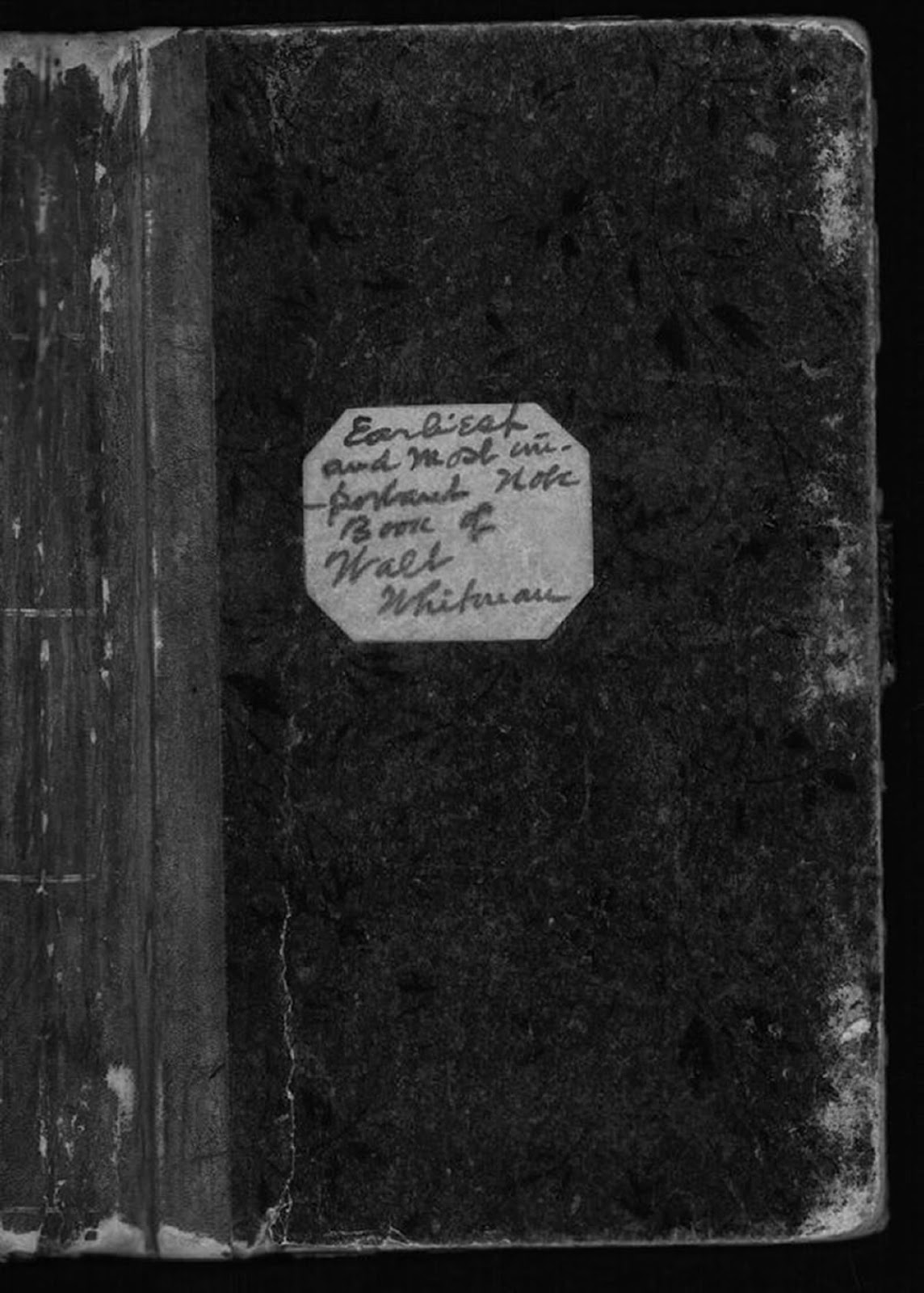
Walt Whitman's Notebooks...!

You would think that when the government is handed over something to care for, then they are safe...right?

Unfortunately this isn't always the case. true, these were only notebooks containing the notes and documents of one of our most celebrated poets. It's not like they were atomic weapons or anything of that importance (even those have been lost, misplaced, or stolen). Still, there is no excuse for this kind of poor handling of something so valuable and non-replaceable.

Walt Whitman’s notebooks


Walt Whitman’s notebooks. (Credit: Public Domain)

In the early 1940s, during World War II, the Library of Congress packed up a number of valuable items in its collections, including 10 notebooks once belonging to celebrated poet Walt Whitman (1819-92), and sent them to locations outside of Washington, D.C., for safekeeping. Sometime during the process, Whitman’s notebooks, which had been donated to the library in 1918 by one of his literary executors, disappeared and were thought stolen. Prized by scholars, the notebooks contained early versions of material that later appeared in Whitman’s famous 1855 book of poetry, “Leaves of Grass,” and also included a chronicle of Whitman’s time as a nurse for the Union Army during the U.S. Civil War. In 1995, some 50 years after the notebooks went missing, four of them re-appeared at Sotheby’s auction house in New York, brought there by a man who’d discovered them among his deceased father’s possessions. According to the man, his father had been given the notebooks as a gift and kept them for three decades. The man didn’t realize the notebooks, which in 1995 were reportedly worth as much as $500,000, had been stolen. Sotheby’s returned the notebooks to the Library of Congress; the whereabouts of the other six volumes remains unknown.

Now, I realize that there was a war going on but still, more care should have given these notebooks, if only because of their historical value! I wonder what else they manage to "lose?"

Coffee out on the patio this morning. Better bring an umbrella just in case.

Wednesday, May 11, 2016

Death Crowns...!

Some strange omens can be found in the different rural areas of the United States, including the Death Crown.

Customs can be strange, or at least seem strange to those of us outside the region. However, many of these omens have migrated to other parts of the country over time.

Death Crowns


Photo credit: Lori Kimball/veraviola.com

In the Appalachia, hardened crown-like masses of feathers found in pillows of ill people were viewed as an omen of death. These feather crowns measured 3–5 centimeters (2–3 in) in diameter and were about 1.5 centimeters (1 in) thick. They were known as “death crowns” or, less often, as “angel crowns.”

The phenomenon of these death crowns seems to have been confined almost solely to Appalachia, due to the isolated nature of the area. However, the phenomenon also traveled to places like Missouri and Indiana or anywhere else where the mountain folk migrated.

Death crowns were more than likely a consequence of an ill person’s movements (i.e., tossing and turning). If you found such an artifact inside an ill person’s pillow, it meant that the person would die within three days. It was said that one way to break the omen was to break the feather crown. However, if a death crown was found in the pillow of a recently deceased, it was viewed as a comforting sign, as it meant that the person went to heaven. Many of the still existing death crowns today have made their way into museums. Today, the largest collection of death crowns can be found in the Museum of Appalachia in Clinton, Tennessee.

There are so many omens, both good and bad, coming out of the mountainous areas of the U.S. Makes for an interesting study or discussion, don't you think? This topic was taken from Listverse, of course.

Coffee out on the patio again.

Tuesday, May 10, 2016

Almost An Epidemic...!

Sometimes the consequences of a stupid act are felt that could be deadly.

Here's a case where a ship gets too close to an island and nearly causes a world-wide epidemic, thanks to some cold war bio-weapon research.

Scientist Takes Plankton Samples And Nearly Causes Pandemic


During the Cold War, the Soviets had an active bioweapons program and conducted various tests of biological agents in natural environments. On an island in the Aral Sea in 1971, one such test nearly caused an outbreak of a virulent and hemorrhagic form of smallpox that could have spread across the world.

A Soviet scientific research ship had unknowingly sailed close to the island to take plankton samples. A scientist aboard the ship became infected. After the ship returned to the port of Aralsk, she infected others.

When the Soviets realized what was happening, they initiated a massive vaccination program and shut down transport from Aralsk to other parts of the Soviet Union. This prevented a potentially global outbreak of hemorrhagic smallpox.

Three people died. Even those who had been vaccinated against smallpox got mild to severe cases of the disease, which was an indication of the virulence of this particular strain.

I wonder how many more cases of this type of research are going on. Could they cause another spread of some deadly disease? More than we really want to know, I'll bet!

Coffee out on the patio. They say rain, but I say...so what?

Monday, May 9, 2016

The Chaocipher On Monday Mystery...!

This one is good for those that work a lot of word puzzles and can do some cipher work as well.

Sometimes the right answer is a lot closer than we think. This cipher must have been a good one, seeing how long it took for the answer to be found. Take that, all you government code breakers!

Solving The Chaocipher

The Chaocipher was once famous for its complexity. Now, it’s famous for its simplicity. This cipher machine was extremely small, but it generated ciphers that went unsolved for almost 50 years. John Byrne was a writer who began creating the cipher in the 1920s and soon had a code that he claimed was unsolvable. In his many attempts to show the government and the Navy, he was ignored due to his seeming lack of skills as a cryptanalyst.

Byrne never gave out any details about the Chaocipher until he published his autobiography, Silent Years, which contained examples of famous documents in both plaintext and ciphertext. But even though the Chaocipher was finally available, no one knew how to figure it out. After Byrne’s death, the American Cryptogram Association contacted Byrne’s son to see if he would reveal his father’s secrets. To their dismay, he refused. The code remained a mystery until Patricia Byrne, John Byrne’s son’s widow, finally revealed the secret in 2010.

The mechanism contained two circles with all the letters of the alphabet on their outer edges. The right circle had the alphabet going clockwise in plaintext, while the left circle had it going counterclockwise in ciphertext. By replacing certain letters in a sequence, the machine could create a code that was indecipherable without the machine to translate it back. The system wholly violates Kerckhoffs’s principle, which states that a cryptogram should be secure even if the secret of how it works is public knowledge. Cracking the code was so difficult simply because no one knew exactly how Byrne built his machine.

Maybe the government should have listened to him instead of blowing him off just because he wasn't "officially" trained. Sure would have things a lot easier in the long run don't ya think ?

Coffee inside this morning. Rain is moving back in!

Sunday, May 8, 2016

Poe Wasn't Just A Horror Writer...!

We all know that Edgar Allen Poe could write a mean and scary story, but he had some other talents as well.

This story from Listverse shows just what kind of talent the man had. Not only did he fool the public, but he got his editors all excited and eager to publish what he came up with! Serious talent, if you ask me!

Good Stories Are Hard To Find (And Prove)


Newspapers in the 1800s were easy targets for hoaxes because they were in a constant battle to be the first to publish important news. Often, a paper wouldn’t check too closely before publishing a spectacular story, lest another paper print it first.

It was in this environment that on April 13, 1844, The New York Sun announced the stunning story that the North Atlantic had just been successfully crossed in only three days by a manned balloon. The balloon, the newspaper reported, had been constructed by a team of well-known balloon enthusiasts, including Monck Mason and Robert Holland, who had previously flown from London to Weilberg, Germany. The men’s intention had been to fly from Wales to France, but the balloon had been blown off course, and they found an air current that carried them safely across the ocean in record time, opening up all sorts of new possibilities in international travel.

The public was amazed, newspapers were sold, and two days later, the Sun had to admit it wasn’t true. Though short, the one-day lifespan of the infamous “Balloon Hoax” had its intended goal: Edgar Allen Poe, who had a sick wife and mother, got some sorely needed cash for handing the story to the newspaper.

I'm thinking the man had a terrific imagination and maybe we don't give him the credit he deserves. Just my opinion, of course!

Coffee out on the patio this morning. Happy Mother's Day to all the Mothers out there!